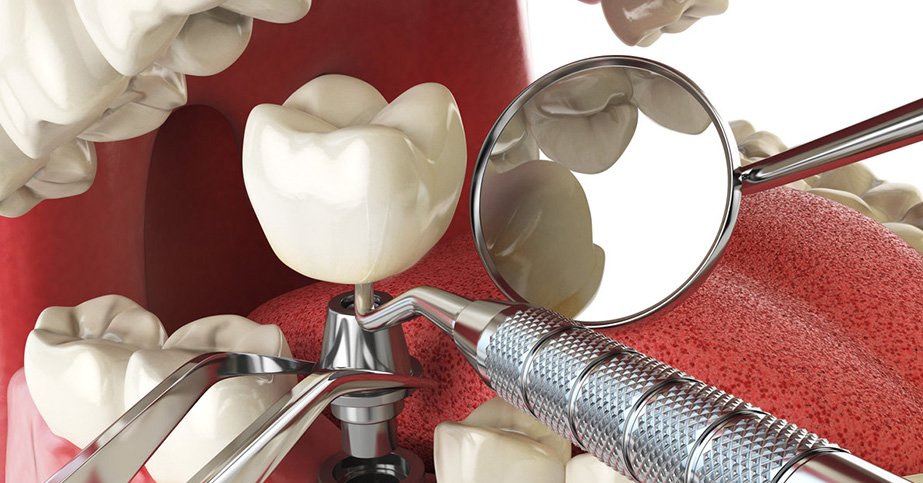
If you've lost most of your teeth, or you're living with a loose denture or failing teeth, you've probably heard the phrase teeth in a day. It sounds like marketing, but the idea behind it is a well-established technique: implants are placed and a fixed set of teeth is attached to them within a day or so, instead of after months of healing.
This guide explains what actually happens on that day, who is a good candidate, how the temporary and final teeth differ, and the situations where waiting is the safer choice.
Wondering if you qualify? The deciding factor is the bone in your jaw, which we check with a 3D scan. Book a consultation at our Pusa Road clinic and we'll tell you whether same-day teeth are possible for you.
What "teeth in a day" really means
In conventional implant treatment, the implants are left to heal in the bone for about three to six months before any teeth are fixed on them. During that time most patients wear a removable denture.
With teeth in a day, also called immediate loading, a fixed bridge is screwed onto the implants on the day of surgery or within about 24 to 72 hours. You don't go through a phase without teeth, and you don't wear a removable plate while the implants heal.
Two things are worth knowing from the start:
- The teeth you get on day one are temporary. They're a strong, fixed provisional bridge, usually acrylic or composite. The final bridge is made a few months later, once the implants have fused with the bone.
- The implants still need time to heal. Same-day teeth don't speed up the biology. They just let you have fixed teeth while it happens, provided the implants are stable enough at placement.
All-on-4 and All-on-6
Teeth in a day is most often done for a full arch, the whole upper or lower jaw. The two common designs are:
- All-on-4: four implants support a full arch of 10 to 14 teeth. The two back implants are usually tilted, which lets them avoid the sinus in the upper jaw and the nerve in the lower jaw and use the denser bone further forward. The concept was described by Paulo Maló and colleagues in 2003 and is now widely used.
- All-on-6: six implants support the arch. The load is spread across more implants, which can help in a larger upper jaw or where the bone is softer. It needs more bone to work with.
Neither is automatically better. The number of implants is chosen from the 3D scan, the quality of your bone, the size of your jaw and how hard you bite. You can read more on our dental implants and full mouth rehabilitation pages.
Can a single tooth be done in a day?
Sometimes. If a front tooth has to come out and the bone around it is healthy, an implant can often be placed straight into the socket with a temporary crown attached the same day. The temporary crown is kept slightly out of the bite so that it isn't loaded when you chew. For back teeth, where biting forces are much higher, most dentists prefer to let the implant heal first.
Who is a good candidate?
The key requirement is primary stability: the implant has to be held firmly in the bone the moment it's placed. If it can move even slightly while it heals, it may not fuse with the bone. Your dentist measures this during surgery, and if the implants aren't stable enough, the safer plan is to let them heal before attaching teeth.
Same-day teeth tend to work well for people who:
- have lost most of their teeth, or have teeth that can't be saved because of advanced gum disease or decay
- have enough bone in the front part of the jaw, even if the back has shrunk
- are in reasonable general health, with diabetes, if present, under good control
- don't smoke, or are willing to stop around the time of surgery and healing
- can stick to a soft diet for the first couple of months
Extra care, or a staged approach, may be needed if you:
- grind or clench your teeth heavily (bruxism)
- have very thin or soft bone throughout the jaw
- have uncontrolled diabetes, or take bone medications such as bisphosphonates
- have had radiotherapy to the head and neck
When the upper jaw has very little bone at the back, other options include a sinus lift before implants, or tilted implant designs that avoid the sinus altogether.
What happens on the day
- Planning beforehand. A 3D CBCT scan shows the height, width and density of the bone, and where the nerve and sinus sit. The implant positions are planned on the scan, and impressions or a digital scan are taken so the temporary bridge can be prepared.
- Extractions, if needed. Any remaining teeth that can't be saved are removed and the sockets are cleaned.
- Implant placement. The implants are placed under local anaesthesia, with sedation available if you're anxious. Stability is measured for each one.
- Fitting the temporary bridge. If the implants are stable, the provisional bridge is adjusted and screwed into place, either the same day or within a day or two.
You leave with fixed teeth that you can smile and speak with. It takes a little time to get used to them, especially for speech, but most people adjust within a week or two.
The first few months
The biggest rule after same-day teeth is to protect the implants while they fuse with the bone. In practice that means:
- Soft food only for roughly the first eight weeks. Think dal, khichdi, curd, soft paneer, eggs, well-cooked vegetables and soft rotis. Avoid nuts, hard fruit, bones, tough meat and anything you'd have to tear with your front teeth.
- Keep everything clean. Brush gently, use the mouth rinse prescribed, and use a water flosser or interdental brushes under the bridge once the gums have settled.
- Don't smoke. Smoking is one of the strongest risk factors for implants failing to integrate.
- Turn up for reviews. The bite on the temporary bridge is checked and adjusted at follow-up visits.
Some swelling and soreness for the first few days is normal and usually settles with the medicines prescribed.
The final bridge
After about three to six months, once the implants have integrated, the temporary bridge is replaced with the final one. This is usually made from zirconia, porcelain on a metal frame, or acrylic teeth on a titanium bar. Zirconia is the strongest and best looking, and it doesn't stain; acrylic is lighter and easier to repair but wears faster. Your dentist will go through the options with you, along with the cost of each.
The final bridge is also fixed. It's removed only by the dentist for professional cleaning and check-ups.
Teeth in a day vs a conventional implant timeline
| Teeth in a day | Conventional (delayed) loading | |
|---|---|---|
| Teeth while healing | Fixed temporary bridge | Usually a removable denture |
| Surgeries | Often one | Sometimes two (placement, then uncovering) |
| Diet in early months | Strictly soft | Soft, and the denture limits chewing anyway |
| Requirement | High implant stability at placement | More flexible about bone quality |
| Total time to final teeth | About 3–6 months | About 3–6 months, longer if grafting is needed |
The total time is similar. The real difference is whether you spend those months with fixed teeth or with a denture.
Tired of a loose denture or failing teeth? Book a consultation and scan. We'll tell you honestly whether same-day teeth are suitable, how many implants you'd need and what it will cost.
Meet our implant team
Full-arch implant cases at our clinic are planned by implant and prosthodontic specialists working together, one placing the implants and one designing the teeth that go on them.

Dr. Varun Malhotra
Consultant Orthodontist & Implantologist
BDS · MDS Orthodontics · M. Orth. RCS Edinburgh
Topped the AIIMS national entrance exam and completed his senior residency there. Handles the practice's most complex implant and orthodontic cases.
Book with Dr. Varun →
Dr. Divyesh Mehta
Prosthodontist & Implantologist
MDS Prosthodontics · Faculty, Manav Rachna
A prosthodontist specialises in replacing and rebuilding teeth with implants, crowns, bridges and veneers, and in getting the bite and appearance right.
Book with Dr. Mehta →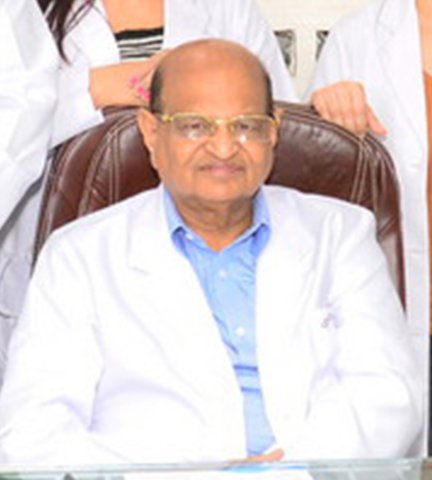
Dr. D.K. Malhotra
Founder & Chief Consultant
Former Head, Dept. of Dental Surgery, Safdarjung Hospital
Opened the practice in 1970 after training in England on a Commonwealth Scholarship. Prosthodontics and restorative dentistry are among his specialities.
Book with Dr. D.K. Malhotra →See the full team on our doctors page.
Frequently asked questions
Is teeth in a day really done in one day?
The surgery and the temporary teeth usually are, sometimes with the bridge fitted a day or two later. The planning visit and scan happen beforehand, and the final bridge is fitted a few months later.
Does it hurt?
The surgery is done under local anaesthesia, so you shouldn't feel pain during it. Afterwards, expect swelling and soreness for a few days, which is managed with prescribed medicines. Many patients say it was easier than they expected, but everyone's experience is different.
How long do full-arch implant bridges last?
With good cleaning, regular check-ups and no smoking, the implants themselves can last for many years. The teeth on the bridge may need repair or replacement at some point, especially acrylic teeth, which wear over time.
What if my implants aren't stable enough on the day?
Then the safer plan is to let the implants heal before fixing teeth to them, and you'd wear a temporary denture in the meantime. A good implant team decides this during surgery and won't load implants that aren't ready.
Can I get teeth in a day if I have diabetes?
Often yes, if your diabetes is well controlled. Your dentist will usually ask for a recent HbA1c and may coordinate with your physician.
How much does teeth in a day cost in Delhi?
It depends on the number of implants, the implant system, whether extractions or grafting are needed, and the material of the final bridge. We give a written, itemised quote after the consultation and scan, so you know the full cost before you decide.
Sources: Maló P, Rangert B, Nobre M. "All-on-Four" immediate-function concept with Brånemark System implants for completely edentulous mandibles: a retrospective clinical study. Clin Implant Dent Relat Res. 2003;5 Suppl 1:2–9.
This article is for general information and isn't a substitute for an examination by a dentist. Whether same-day teeth suit you depends on your bone, your bite and your medical history.