
Implantology
Dental Implants in Delhi
Permanent, natural-looking tooth replacement, placed with international-grade implants and computer-guided precision.
Meet the Specialist
Who is an implantologist?
An implantologist is a dentist with focused surgical training in placing and restoring dental implants, a step beyond general dentistry. At Dr. Malhotra's, implant cases are handled by two in-house specialists.
 Consultant Implantologist
Dr. Varun Malhotra
Consultant Orthodontist & Implantologist
Dr. Varun topped the AIIMS national entrance exam and later earned a fellowship from the Royal College of Surgeons, Edinburgh. Alongside orthodontics, he handles the practice's implant cases, from single-tooth replacements to full-arch reconstructions.
 Prosthodontist & Implantologist
Dr. Divyesh Mehta
Prosthodontist & Implantologist
Dr. Divyesh specialises in the restorative side of implant treatment: the crowns, bridges and full-arch prosthetics that complete an implant case. He's also on the teaching faculty at Manav Rachna Dental College.
The Basics
What are dental implants?
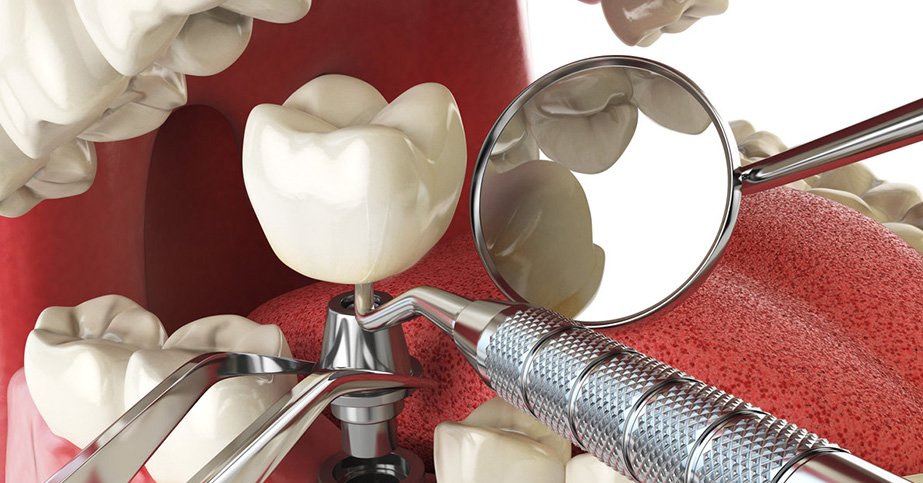
A dental implant is a titanium post surgically placed into the jawbone, acting as an artificial tooth root. Once it has healed and fused with the bone, a natural-looking crown is attached on top. The result is a replacement tooth that looks, feels and functions like a real one.
Replacing just one tooth? Our single tooth implant page covers cost and procedure specific to a single implant.
Single Tooth Implant
Replaces one missing tooth with an implant and crown, without touching adjacent healthy teeth.
Multiple Implants
Replaces several missing teeth without a full removable denture. Stable, fixed and comfortable.
All-on-4 / All-on-6
A full arch of teeth supported on just 4 or 6 implants, often completed with same-day fixed teeth.
Why It Works
Benefits of dental implants
An implant is the only tooth replacement that behaves like a real tooth, because it replaces the root, not just the visible crown. That one difference is what separates it from a bridge or a denture.

Feels like your own tooth
An implant restores the whole tooth, root included, so biting, chewing and speaking feel the way they did before you lost the tooth. Nothing clicks, nothing slips, nothing comes out at night.
Protects the teeth next to it
A bridge needs its neighbouring teeth filed down to anchor a crown. An implant stands on its own, so the healthy teeth on either side of the gap are left exactly as they are.
Keeps your jawbone from shrinking
Once a tooth is gone, the jawbone under it starts resorbing within months, which is what gives a "sunken" look over the years. The implant's titanium post replicates the root and keeps that bone stimulated.
Built for decades, not years
Implants have the strongest long-term track record of any tooth replacement, routinely lasting 15 to 25 years and often a lifetime. Only the crown on top may need replacing after a decade or so of everyday wear.
Weighing Your Options
Implant vs. bridge vs. denture
Patients usually ask us to compare all three before deciding. Here's the honest breakdown, not just the sales pitch for implants.
| Factor | Dental implant | Fixed bridge | Removable denture |
|---|---|---|---|
| Adjacent teeth | Left untouched | Filed down to anchor the bridge | Untouched, but clasps can stress them |
| Jawbone health | Stimulated, so bone is preserved | No stimulation under the gap | No stimulation, bone shrinks over time |
| Typical lifespan | 15–25 years, often longer | 10–15 years | 5–8 years, needs relining sooner |
| Daily feel | Fixed, bites and chews like a natural tooth | Fixed, close to natural | Removable, can shift while eating or speaking |
| Treatment time | 3–6 months, including healing | 2–3 visits over 2 weeks | 2–4 visits over 2–3 weeks |
A bridge or denture can still be the right call in some cases, for instance when bone volume is too low for an implant and grafting isn't an option. We'll tell you plainly which one fits your case at the consultation.

Your Journey
What to expect
Consultation
A 3D CT scan maps your jawbone density and the position of nerves and sinuses down to the millimetre. Combined with an oral exam, this is what lets us plan the implant's angle and depth digitally, before any drilling happens.
Treatment day
The implant is placed under local anaesthesia, so you're awake but numb through the site. The surgery itself usually takes 30 to 60 minutes per implant. Most patients tell us it was easier than a root canal.
Healing
Expect mild swelling and soreness for 3 to 5 days, manageable with standard painkillers and a soft diet. Underneath, the implant is fusing with the bone (osseointegration), which takes 3 to 6 months depending on bone quality and implant location.
Final crown & review
Once the scan confirms the implant has integrated, we take an impression and fit the permanent crown. A follow-up at 1 week, 1 month and 3 months checks bite alignment and gum healing around the new tooth.
Step by Step
Procedure of tooth implantation
Consultation & 3D scan
Maps your jawbone and nerve position before any surgery.
Bone grafting, if needed
Only if bone volume is too low to support an implant.
Implant placement
Titanium post placed under local anaesthesia, computer-guided.
Osseointegration
3 to 6 months for the implant to fuse with the bone.
Crown placement
A custom, natural-looking crown completes the restoration.

Before You Decide
Are you a good candidate?
Most adults are, but a few things get checked before we recommend an implant over other options.
Life After Surgery
Caring for your new implant
An implant doesn't get cavities, but the gum around it can still develop problems if it's neglected. The upkeep is closer to caring for a natural tooth than most patients expect.
Brush morning and night as usual
Angle the bristles where the crown meets the gum, the same spot plaque collects around a natural tooth. A soft-bristled or electric brush works well here.
Clean underneath the crown daily
An interdental brush or a floss threader reaches the gap under the crown that a regular floss strand can't. Skipping this is the most common reason implants develop gum inflammation.
Ease back into solid food
Stick to soft foods, dal, khichdi, mashed vegetables, for the first week while the surgical site settles, then return to your normal diet.
Keep away from cigarettes while healing
Smoking restricts blood flow to the gum and bone, exactly what the implant needs to fuse properly. It's the single biggest controllable risk to implant failure.
Keep your 6-month cleaning appointment
A professional clean lets us catch early gum inflammation around the implant, known as peri-implantitis, before it reaches the bone underneath.
Quality You Can Trust
Implant brands we use
We don't cut corners on the implant system itself. Every case uses certified, internationally recognised titanium implants, matched to what that case actually needs.
International-Grade Titanium
Premium implant systems with a strong long-term clinical track record, not the cheapest option on the market.
CE & ISO Certified
Every system we place meets international certification standards for safety and biocompatibility.
Matched to Your Case
Your implantologist recommends the exact system and size for your bone density and treatment plan at consultation.
Why Dr. Malhotra's
Why choose us for implants?
Delhi has no shortage of clinics advertising dental implants. Here's what actually separates an experienced implant dentist from a general dentist who also places implants.
Two dedicated implantologists, backed by a full specialist team
Dr. Varun Malhotra and Dr. Divyesh Mehta handle every implant case in-house, from a single tooth implant to full-arch All-on-4 and All-on-6 reconstructions, with nine more specialists across orthodontics, periodontics and prosthodontics under the same roof if your case needs a second opinion.
Computer-guided surgery for accurate placement
Every implant case at our Delhi clinic is planned on a 3D CT scan before a drill is picked up, so depth and angle are mapped digitally rather than judged by eye alone.
ISO 9001:2000 certified sterilisation
Instruments and surgical protocols are certified to ISO 9001:2000 standards, the same benchmark the practice has held since it opened in 1970.
Rated 4.9 out of 5 by patients across Delhi
Over 850 Google reviews put us among the best-rated clinics for dental implants in Delhi, built on repeat patients and referrals rather than paid promotion.
Transparent dental implant cost in Delhi
You get one all-inclusive quote after your consultation, covering the implant, crown and review visits, with nothing added on later once treatment has started.
Trusted by Delhi families since 1970
Three generations of the same families come to us for everything from a single tooth implant to full mouth rehabilitation, a longer track record than most implant clinics in the city can claim.
Transparent Pricing
Dental implant cost in Delhi
Dental implant price in Delhi isn't one fixed number, it depends on your specific case. Here's what actually moves the price:
We give you a fixed, all-inclusive quote after your consultation, with no hidden add-ons later. That quote covers:
Implant & Abutment
The titanium fixture and the connector piece that anchors your crown to it.
The Crown Itself
Custom-shaded and shaped to match your surrounding teeth.
Planning & Review Visits
The CT scan, surgical placement, and follow-up checks through healing.
Common Questions
Dental implant FAQs
The cost depends on the number of implants, the type of restoration (crown, bridge, or full arch), and the implant brand. We use premium international-grade systems. Book a free consultation and we'll give you an accurate, no-obligation quote.
The surgery is done under local anaesthesia — you won't feel pain during the procedure. Post-operative soreness is normal and easily managed with standard medication. Most patients are surprised by how comfortable it is.
With proper oral hygiene and regular check-ups, implants can last a lifetime. The crown on top may need replacement after 10–15 years.
Standard implants need 3–6 months for osseointegration — the implant fusing with the bone. For same-day implants, a temporary crown is attached the same day where bone density allows.
Most adults with good general health are suitable candidates. Adequate jawbone volume is needed; if it's insufficient, a bone graft can be done first. Book a consultation for a full assessment.
Sometimes, it's called an immediate implant. It depends on the socket's condition and how much healthy bone is left after extraction. In other cases, we let the socket heal for 6 to 8 weeks first for a more predictable result.
A bone graft rebuilds the missing volume using graft material that integrates with your own bone over a few months, after which the implant can be placed as usual. It's a common, well-established add-on step, not a separate surgery to fear.
Book Free Implant Consultation
Get a personalised assessment and cost estimate, no obligation.

Start Your Implant Journey
Ready for a permanent smile fix?
Book a free consultation today and find out exactly what implant solution is right for you.
Explore More